|
I am a Ph.D student at the PCALab of Nanjing University of Science and Technology, where I'm fortunate to be advised by Prof. Jian Yang and co-advised by Prof. Jun Li. Prior to joining NJUST, I obtained my M.S degree in 2019 from Wenzhou University, advised by Prof. Zhengzhou Tang. Email / GitHub / Google Scholar / WeChat |

|

|
My research is focused on computer vision and image processing. I’m particularly interested in image restoration (e.g., real-world dehazing and depth estimation). Representative papers are highlighted. |
|
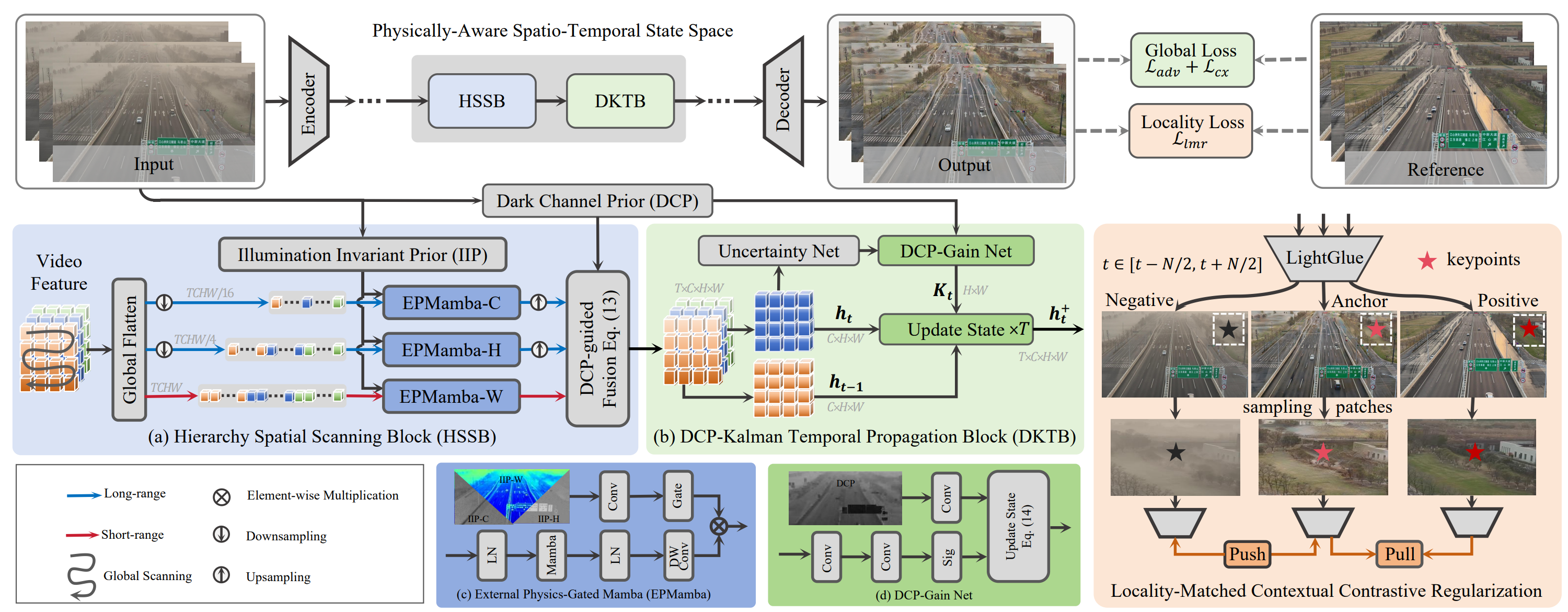
Jiangwei Weng, Qiyue Wu, Wengxuan Fang, Hongtao Wu, Ying Tai, Jian Yang, Junkai Fan ✉, Jun Li ✉ IEEE TCSVT, 2027
We propose PMDVD for drone video dehazing, combining physics-guided, haze-adaptive Mamba scanning for spatial restoration,
haze-aware Kalman propagation for temporal consistency, and locality-matched contrastive regularization for robust training on misaligned data.
|
|
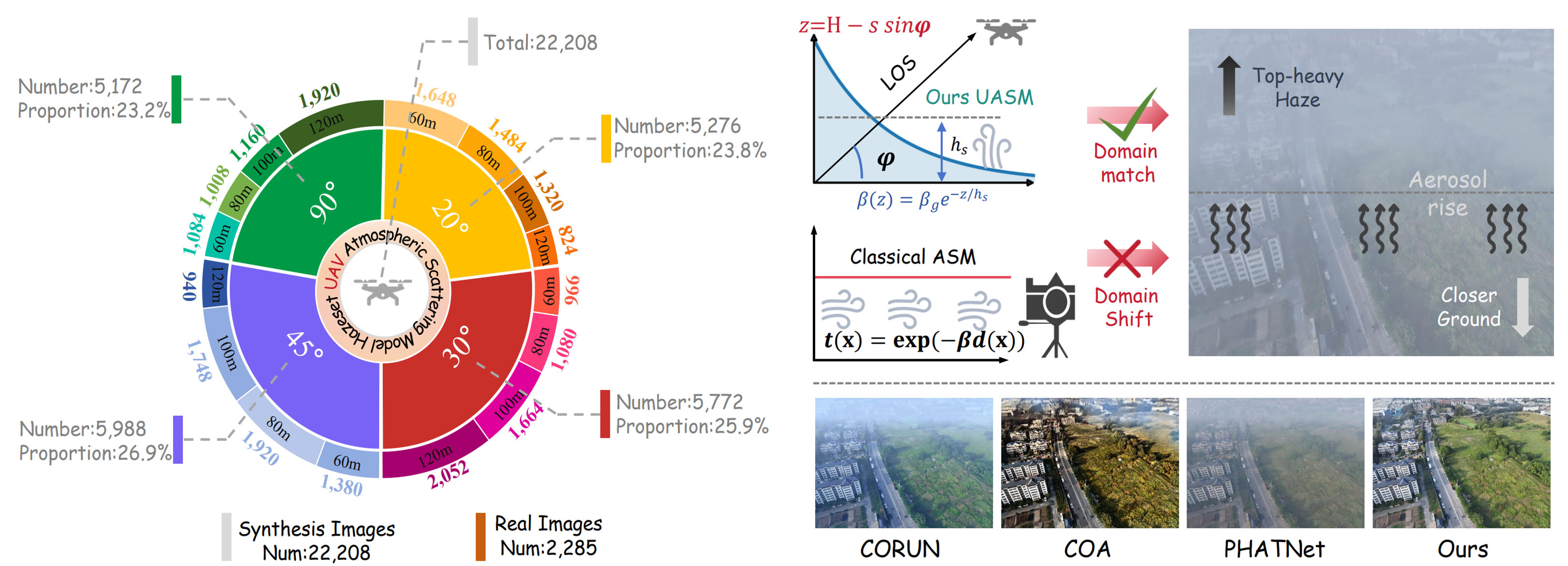
Wengxuan Fang, Jiangwei Weng, Yu Zheng, Junkai Fan, Guangfa Wang, Xiang Chen, Jian Yang ✉, Jun Li ✉ arXiv, 2026
We propose UASM, the first UAV-adapted scattering model that links altitude, pitch, and extinction to capture non-uniform haze.
We also introduce GP-DUN, a geometry-aware deep unfolding framework with UASM-consistent updates and learned priors, achieving superior dehazing on UAV imagery.
|

|
Junkai Fan, Hao Zheng, Kun Wang, Zhiqiang Yan, Jianjun Qian, Heyou Chang ✉, Jian Yang ✉, Jun Li ✉ IEEE TCSVT, 2026
We propose a physics-guided diffusion model that samples RGB and depth via pre-trained diffusion, using a hybrid atmospheric scattering model
for unsupervised high-fidelity dehazing, with two-stage sampling and piecewise loss for enhanced quality and stability, plus post-processing to
suppress JPEG artifacts.
|

|
Jiangwei Weng, Junkai Fan, Jianjun Qian, Ying Tai, Jian Yang ✉, Jun Li ✉ IEEE T-ITS, 2025
We propose a novel nighttime image enhancement framework using daytime-mixed misaligned supervision. It aims to couple information between non-aligned daytime and nighttime image pairs.
Specifically, our framework consists of a simple yet effective daytime-mixed supervised learning phase and a Retinex-based reconstruction phase.
|

|
Kun Wang, Zhiqiang Yan, Junkai Fan, Jun Li ✉, Jian Yang ✉ arXiv, 2025
LP-Net uses a multi-scale, progressive depth completion method via Laplacian Pyramid, starting with global scene context and refining local details with selective filtering.
It achieves SOTA on indoor/outdoor datasets, is computationally efficient, and leads the KITTI leaderboard among peer-reviewed methods at submission.
|

|
Junkai Fan, Kun Wang, Zhiqiang Yan, Xiang Chen, Shangbin Gao, Jun Li ✉, Jian Yang ✉ AAAI, 2025 project page / github / video / poster / slides / 中文解读
We propose a novel depth-centric learning framework that combines the atmospheric scattering model(ASM) model with the brightness consistency constraint (BCC) constraint.
The core idea is to use a shared depth estimation network for both ASM and BCC.
|

|
Wengxuan Fang, Junkai Fan, Yu Zheng, Jiangwei Weng, Ying Tai, Jun Li ✉, AAAI, 2025 project page / github
We propose a novel Structure Guided Dehazing Network (SGDN) that utilizes the superior structural properties of YCbCr features over RGB.
Additionally, we introduce the Real-World Well-Aligned Haze (RW2AH) dataset, featuring diverse scenes from various geographical and climatic conditions.
|

|
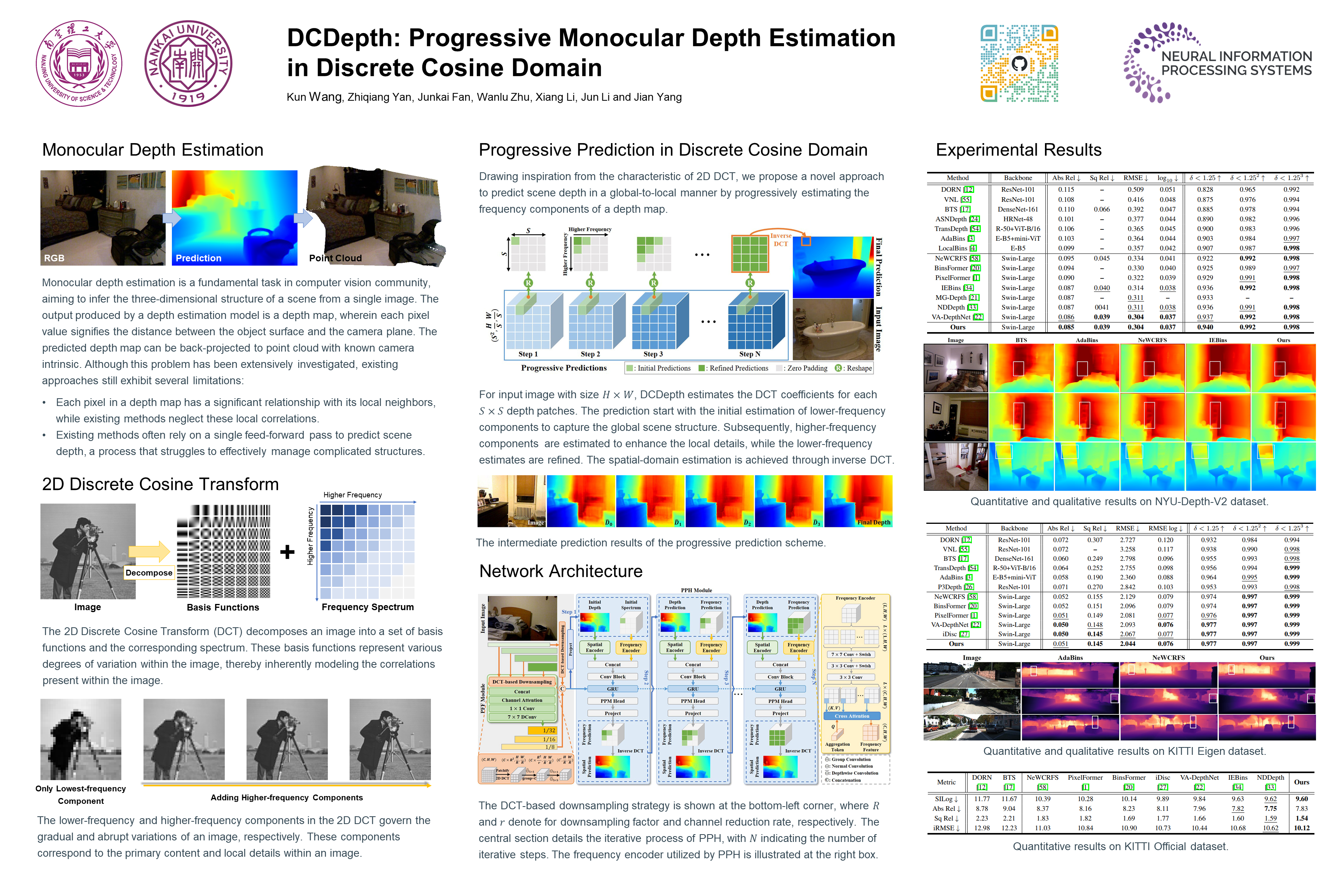
Kun Wang, Zhiqiang Yan, Junkai Fan, Wanlu Zhu, Xiang Li, Jun Li ✉, Jian Yang ✉ NeurIPS, 2024 project page / github / poster / slides
DCDepth uses discrete cosine transformation on depth patches to estimate frequency coefficients, capturing local depth correlations.
It separates depth into low-frequency (global structure) and high-frequency (details) components, predicting global context first and refining details progressively.
|


|
Junkai Fan, Jiangwei Weng, Kun Wang, Yijun Yang, Jianjun Qian, Jun Li ✉, Jian Yang ✉ CVPR, 2024 project page / github / video / poster
We propose a video dehazing framework for real-world driving scenes that can be trained on hazy and clear video pairs without precise alignment.
The framework uses a reference frame matching module to mitigate spatial and temporal misalignment between the paired videos.
|
|
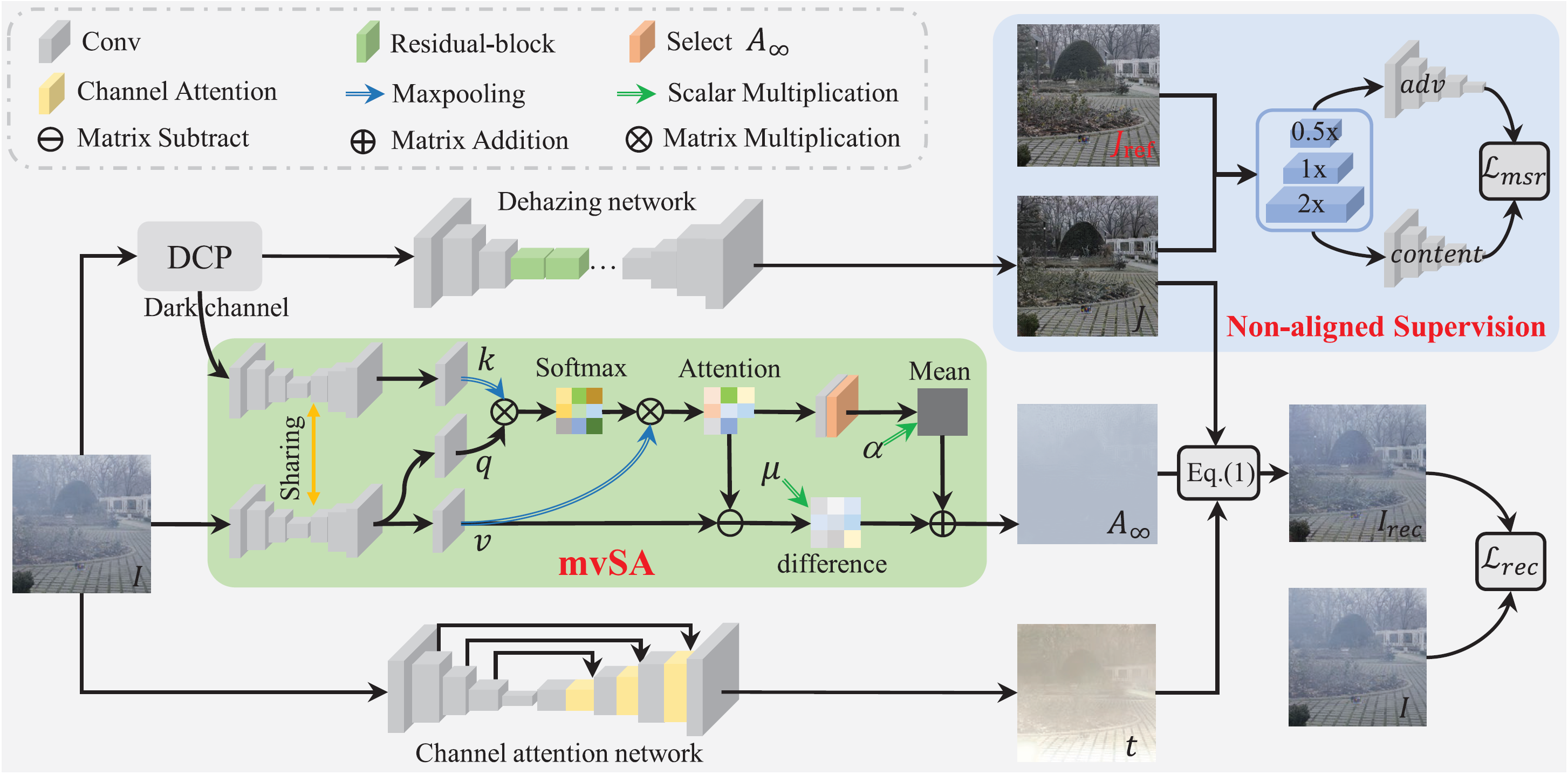
Junkai Fan, Fei Guo, Jianjun Qian, Xiang Li, Jun Li ✉, Jian Yang ✉ IEEE TCSVT, 2025 project page / github
Our model restores clear images and videos from inputs captured under real-world haze conditions. By relaxing the need for precise alignment between
haze inputs and their clear ground-truth counterparts, our training approach makes it easier to collect real-world training data.
|
|
|
|
This webpage is fork from Jon Barron. Thanks to him! |